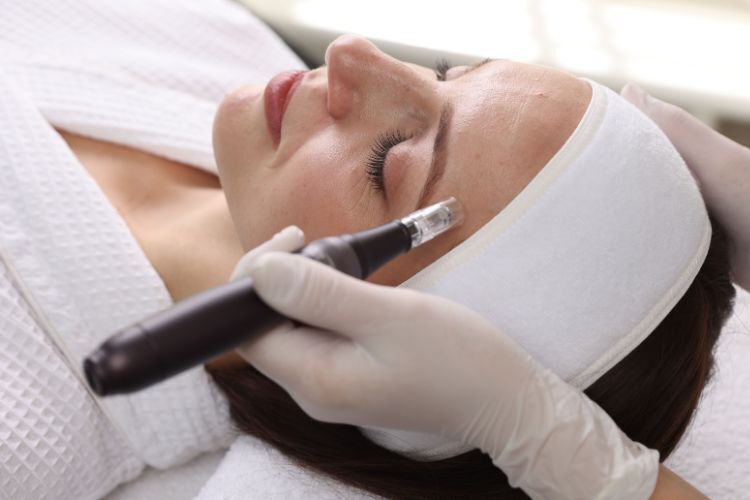
If you've tried serums, peels, and every skincare product internet recommends and your acne scars are still there, you're not alone. Microneedling for acne scars has become one of most talked-about treatments in aesthetics, and for good reason. When done correctly, it works. But "done correctly" matters more than most people realize.
At Corbett Hill Wellness Center in Portland, Oregon, our aesthetics team has seen what thoughtful, clinician-guided microneedling can do for patients who've tried everything else. Here's what you actually need to know before booking.
What Is Microneedling and How Does It Work on Acne Scars?
Microneedling uses a device with fine needles to create thousands of tiny, controlled micro-injuries in skin. This might sound counterintuitive, creating wounds to heal scarring, but that's exactly what triggers skin's natural repair response.
When those microchannels form, your body responds by producing new collagen and elastin. Over time, that fresh tissue fills in depressions left by acne scars, smoothing skin's surface from inside out. Research published in Journal of Cutaneous and Aesthetic Surgery found most patients with atrophic (depressed) acne scars saw significant improvement after completing microneedling sessions, with results continuing to develop for weeks after each treatment.
This is different from topical treatments, which can only affect skin's surface layer. Microneedling works at deeper structural level, which is why it tends to produce more lasting change. Collagen production triggered by each session builds on previous work, creating cumulative improvement that topicals simply can't replicate.
What Types of Acne Scars Respond Best?
Not every scar is same, and results vary based on scar type. Microneedling tends to work best for rolling scars, which are shallow wave-like depressions that give skin uneven texture. Boxcar scars, which are wider flat-bottomed indentations with defined edges, also respond well. Early or mild ice pick scars, narrow deep pits, can improve, though deeper ice pick scars may need combination approaches for best results.
Post-inflammatory hyperpigmentation, meaning flat dark spots left after breakouts, also responds well to microneedling when combined with right serums applied immediately after treatment. Microchannels allow deeper product absorption than normal skin, making that post-treatment window especially valuable for brightening and tone-evening.
If you're unsure which type of scarring you have, booking consultation at our Portland clinic is best first step. Different scar types benefit from different depth settings and treatment approaches, so what works best for one patient may not be right for another.
How Many Sessions Do You Need?
This is one of most common questions, and honest answer is: it depends on your skin. Most patients with mild to moderate acne scarring see meaningful improvement with three to six sessions, spaced four to six weeks apart. Deeper or more extensive scarring may require more.
Reason for multiple sessions isn't that any single treatment is weak. Collagen remodeling is slow biological process. Each session layers onto last, with visible improvement typically appearing two to four weeks after each treatment as new collagen matures. Patients often describe results as sneaking up on them. They notice one day that texture they'd grown used to seeing just isn't there anymore.
Before-and-after results for microneedling acne scars consistently show that patience is part of process. Skin you see immediately after session isn't your final result. It's beginning of 30-to-60-day cycle of improvement. Planning your series with that timeline in mind helps set realistic expectations and keeps you from judging results too early.
What Makes Microneedling at Corbett Hill Different?
Corbett Hill Wellness Center has offered aesthetics services in Portland's South Corbett neighborhood since 2003. Our acupuncture and aesthetics team, including Anne Carruth and Jess Long, both licensed acupuncturists with training in cosmetic needling, brings precision-focused, holistic approach to microneedling that's different from med-spa assembly-line treatment.
Because our practitioners work daily with needles at clinical level, they understand tissue response, depth control, and how to adapt technique to each patient's skin. That expertise matters when you're talking about something as nuanced as scar remodeling. Depth calibration in particular is something that separates skilled practitioners from rushed ones. Too shallow and you won't reach scarred tissue. Too deep and you risk unnecessary trauma.
We also offer nano-needling, gentler complement to traditional microneedling that works on very surface of skin to improve tone, product absorption, and fine texture. For patients newer to needling or with more sensitive skin, nano-needling is often right starting point before progressing to deeper microneedling sessions.
Microneedling vs. Laser for Acne Scars
Patients deciding between microneedling and laser resurfacing often want clear answer. Reality is both can be effective, but they work differently and suit different patients.
Microneedling is generally better tolerated by all skin tones. It carries lower risk of post-inflammatory hyperpigmentation, which can be concern with laser on darker skin. Downtime is minimal, typically 24 to 48 hours of redness, and cost per session is more accessible for patients completing full series of treatments.
Laser resurfacing can deliver more dramatic results in fewer sessions for certain scar types, but comes with more significant downtime, higher cost, and narrower range of appropriate skin tones.
For many patients in Portland who want consistent, safe improvement without significant disruption to daily routine, microneedling is practical first choice. For more complex cases, combining both modalities may be worth discussing during consultation. Our team can help you understand which path makes most sense for your skin and goals.
What to Expect at Your Appointment
Microneedling session at Corbett Hill typically takes 60 to 90 minutes. After thorough skin assessment, topical numbing cream is applied and given time to work before treatment begins. Procedure itself usually takes 20 to 30 minutes, followed by calming serum applied through open microchannels while skin is most receptive.
Most patients experience redness similar to mild sunburn for 24 to 48 hours. Some light peeling or dryness is normal in days that follow. Sun protection is essential during healing window, and your practitioner will give you specific aftercare instructions suited to your skin type.
Downtime is minimal. Many patients in Portland schedule appointments around work day and return to normal activities next morning. You won't need to clear your calendar or plan extended recovery.
Combining Microneedling with Other Treatments
One of strengths of microneedling is how well it works alongside other services. At Corbett Hill, patients interested in full facial rejuvenation often pair microneedling sessions with cosmetic acupuncture, which addresses muscle tone, circulation, and overall skin vitality through different mechanism. Together, both treatments support skin health from multiple angles without competing with each other.
For patients with hormonal acne as underlying cause of scarring, working with Dr. Karin Volkoff Smith, ND, LMT, on naturopathic medicine side can address root cause while aesthetics team focuses on surface. That integrated, whole-person approach is what makes multidisciplinary clinic like Corbett Hill different from standalone aesthetics studio.
Ready to Take Next Step?
If you've been living with acne scars and wondering whether it's too late to do something about them, it isn't. Microneedling for acne scars is one of most evidence-supported, low-risk skin treatments available, and results patients see after thoughtful series of sessions are consistently meaningful.
To learn more or to book consultation at Corbett Hill Wellness Center in Portland, visit our aesthetics page or call us at (503) 225-9033. Our team is happy to walk you through what to expect for your specific skin.